
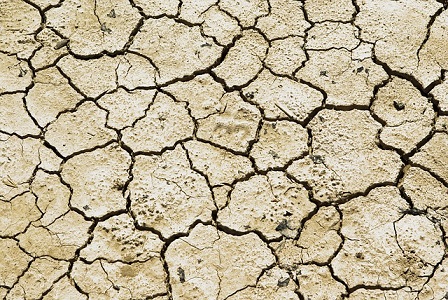
The results of a recent Water Research Commission (WRC) study that investigated the traditional coping strategies for drought conditions used by farming communities in the Karoo area in South Africa, is being used to assist South Africa’s farming community to cope with the ongoing drought.
The study’s emphasis was on indigenous knowledge embedded in local culture, which has been the basis for all decisions on food security, human and animal health, education and natural resource management by local communities.
Indigenous people such as the Khoisan have been living and coping with extreme environmental conditions such as drought for centuries, yet there is a marked lack of studies seeking to capture the local indigenous knowledge that these communities carry regarding the impacts, experiences, coping and adaptation strategies for drought.
According to Dr Sylvester Mpandeli, the Research Manager responsible for Water Utilisation in Agriculture projects at the WRC, most of the studies and attention has to date been on scientific knowledge. The fact that local indigenous people have been living, surviving and adapting to extreme climates for a long time has been totally ignored in the search for answers.
Dr Bongani Ncube, the project leader for the study, stressed that animal behaviour informed the Karoo farmers about whether rain is coming or not. Some examples of animal behaviours that the farmers watch for are:
- Marsh terrapin (Pelomedusa subrufa) moving down the mountain indicates drought; when it goes up it indicates rain;
- Snakes coming down from the mountains is an indication of drought;
- The presence of the angulate tortoise (Chersina angulate) indicates thunderstorms;
- Blue cranes circling high up in the sky indicates approaching thunderstorms;
- If the rain flower produces flowers, it will start to rain the following day;
- A Karoo bustard/korhaan in the veld is an indication of rain coming in a few days;
- The presence of small insects indicates that it will rain in 14 days; and
- Black ants collecting food to store indicates that it will rain in a few days
These and other indicators such as the appearance of certain plant species, day and night temperatures, wind direction, and more are what the locals use to predict the weather.
Coping strategies include migrating animals to better grazing lands, conserving grazing lands through long-term paddocking and rotating camps, early marketing of livestock, de-stocking, changing breeds for those that survive better during drought, conserving water through rainwater harvesting from mountain slopes, construction of stock dams for water storage and use of windmill-pumped boreholes, and the use of water-conserving drip irrigation.
Water cooler company and water coolers from Water Cooler Company UK.